
Spread over its seven famous hills, Rome had been founded (as a result of fratricide and divine intervention, if you believed the legends of its mythical founder Romulus) in the mid-eighth century BC, but the Rome of the first century AD would have been unrecognisable from the city of even a century before. The small brick and tufa temples, raised by the competing aristocrats of the late Republic, had been replaced by huge complexes designed for politics, commerce, worship and play and clad in shining polished marble, that proved the magnificence and munificence of the emperor alone. Messalina was born during Tiberius’ reign, but she was born into a city that had been created by his predecessor Augustus. This was a place of unimaginable opulence – a living monument to the imperial power of Rome and, more subtly, to the dynastic power of its imperial family. It was a city that could not help but shape its children

Honor Cargill-Martin’s Books
Similar authors
-
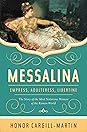 Messalina: Empress, Adulteress, Libertine: The Story of the M...
3.97 925 ratings reviewsPublished 2023
Messalina: Empress, Adulteress, Libertine: The Story of the M...
3.97 925 ratings reviewsPublished 2023 -
 She Speaks: The Women of Greek Myths in Their Own Words
4.20 76 ratings reviews
She Speaks: The Women of Greek Myths in Their Own Words
4.20 76 ratings reviews -
 The Six Queens of Henry VIII
really liked it 4.00 53 ratings reviews
The Six Queens of Henry VIII
really liked it 4.00 53 ratings reviews -
 She Speaks: The Women of Norse Myths in their Own Words
3.71 7 ratings reviews
She Speaks: The Women of Norse Myths in their Own Words
3.71 7 ratings reviews -
 Walker Studio Heroines of the Ancient World (Walker Studio).
4.67 3 ratings review
Walker Studio Heroines of the Ancient World (Walker Studio).
4.67 3 ratings review
Author Details
Quotes
Para ser una sociedad con una estructura descaradamente patriarcal y una cultura que a menudo era furiosamente misógina, a los antiguos romanos les encantaba educar a las mujeres. Parece que en los siglos I antes y después de Cristo (la época mejor documentada) un número significativo de ciudadanas, incluidas algunas que no pertenecían a la élite, estaban en parte alfabetizadas. Varios escritores mencionan, sin mostrar sorpresa, que tanto niñas como niños asistían a las escuelas elementales de precio medio que enseñaban a leer, escribir, aritmética y, en ocasiones, las bases de la literatura a los hijos de las clases medias-altas en las esquinas sombreadas de los foros de las ciudades italianas. Fragmentos de los grafitis de Pompeya, garabateados en los muros de los espacios públicos de las ciudades ("Rómula se tiró aquí a Estafilo", "Serena odia a Isidoro" "Atimeto me dejó preñada") sugieren que algunas mujeres de estratos sociales más bajos podían al menos escribir nombres y unas pocas frases.